I know it’s a bit late to say it, but this is my first Welcome Church blog post of 2025! Thanks for reading this far 🙂
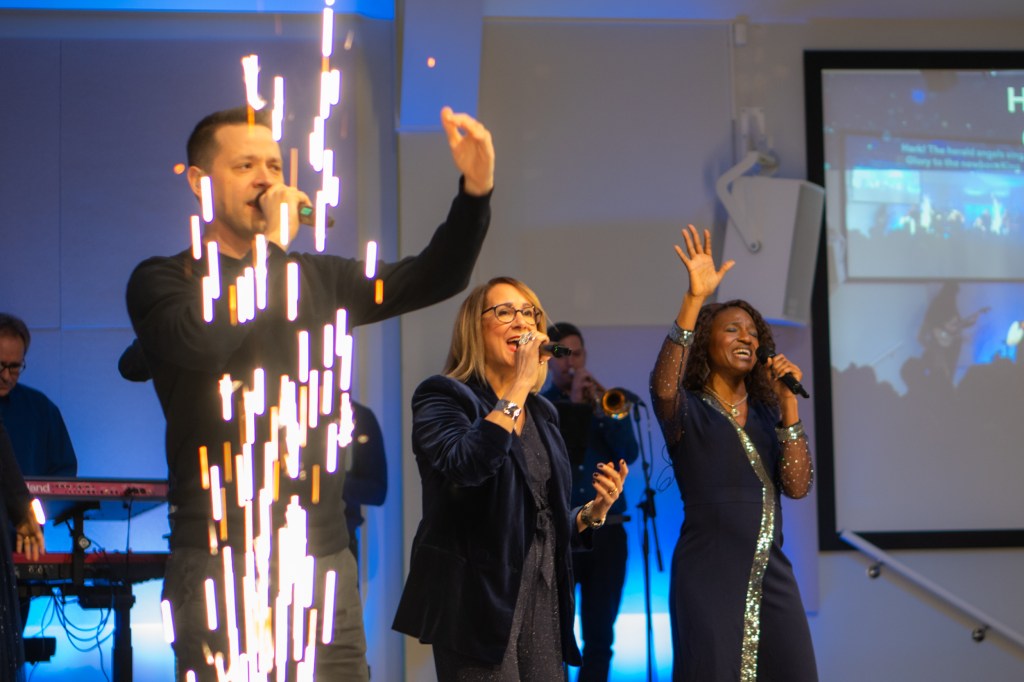
We had a great Christmas and New Year season at Welcome Church. I talked about our Carol Services in a previous post, and this year we also introduced a Watchnight Celebration as a brand new event on New Year’s Eve. It was a lot of fun, and I’m looking forward to next year already. Put it in your diary now!
New Year’s Eve at Welcome Church
Staff Team Updates
We have some important changes happening within our church staff team this year.
As the church grows, so do the demands on our team, and we’ve certainly felt the strain of being understaffed in 2024. If you haven’t worked for a church I know it’s hard to imagine what people do all day, but believe me: we are incredibly busy.
For clarity, Welcome Church has more than doubled in size since I arrived 7 years ago, but the employed team is smaller now than it was back then. Everyone is running flat out, and we’ve only survived thanks to some very kind and committed office volunteers who we appreciate so much.
I’d like to share four updates:
First: Jonathan and Sabrina – Leadership Trainees
Jonathan and Sabrina’s time with us will come to an end in June this year, giving us roughly five more months to enjoy and appreciate their contribution. They’re currently praying about their next steps, which are complicated by some VISA challenges. Let’s support them in prayer as they seek God’s will for the future.
Second: Dean – Pastoral Care
Dean, one of our elders, has been working full-time on staff for more than 10 years now. Starting from January 20th, he’ll reduce his hours to three days a week, returning to his passion for architecture on the other two days. In time, he may step out of his staff role entirely. This creates a gap in pastoral care that we’ll need to address.
These first two changes further stretch an already understaffed team. Recruitment will be essential this year, and details on that will follow at the right time. Watch this space 😮
Third: Organisational Leadership
To help the church thrive into the future, we need to strengthen our organisational leadership, which is all about how we steward and align all of our resources to fulfil our vision effectively. This will require some big-picture thinking and also some adjustments to some of our policies, procedures, and ways of working.
To address this, after discussions with the Eldership Team and Trustees, I’ve invited Robin W to step into a new role on an interim basis. Starting immediately, Robin will work two days a week over the next year, focusing on reshaping our organisational leadership. His work will also help us define the future shape of the staff team and help to refine how we operate as a growing church. Part of Robin’s success will be that he replaces himself at the right time and steps back out of the role.
This is an unexpected but exciting step for Robin, and he feels God has been leading him to this role for a while now. I’m eager to make the most of this opportunity to prepare us for the future. It also means he’s stepping back from being a Trustee for the next season. In a business this role might get called Chief Administrative Office, but as a church we’re giving it the title ‘Executive Pastor’ – which leads into the fourth update…
Fourth: Christopher Hawes – New Job Title
Christopher has held the title Executive Pastor for a couple of years, although his role was very different from the one Robin will be taking on and we used the title in a completely different way. To better reflect his actual responsibilities, Christopher’s new job title will now be Teaching Pastor. While his job role remains unchanged, we feel this title better captures his primary focus, and he’s fully supportive of the change.
More changes to come
These are the first four changes for 2025, and several more will follow as we seek to grow and strengthen the staff team. Let’s all show our love and support to each of these individuals as they step into what God has both for them and for our church in this new season.
Stay connected with everything happening at Welcome Church by subscribing to this blog for weekly updates sent straight to your inbox
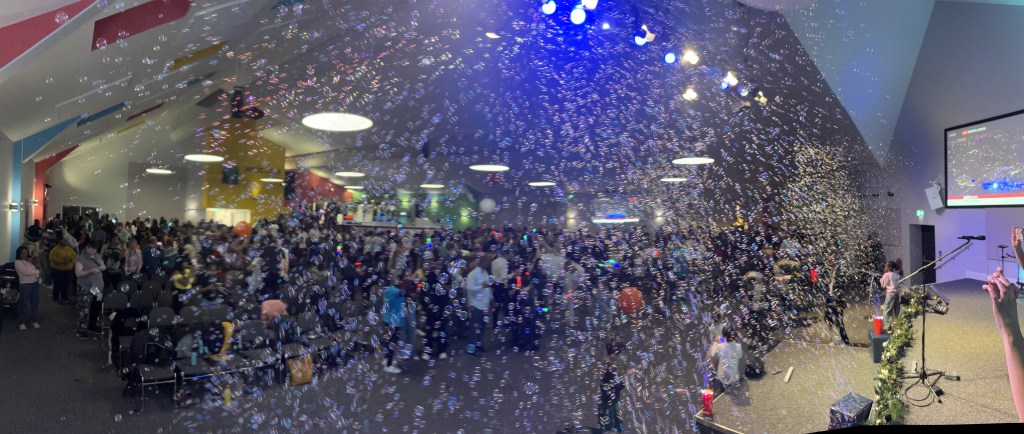
Last Sunday we had our “Carol Service For Woking”, and what a day it was! We held four services across the day, with more than 2,400 people involved, either attending as guests or giving their time to serve in many different ways.
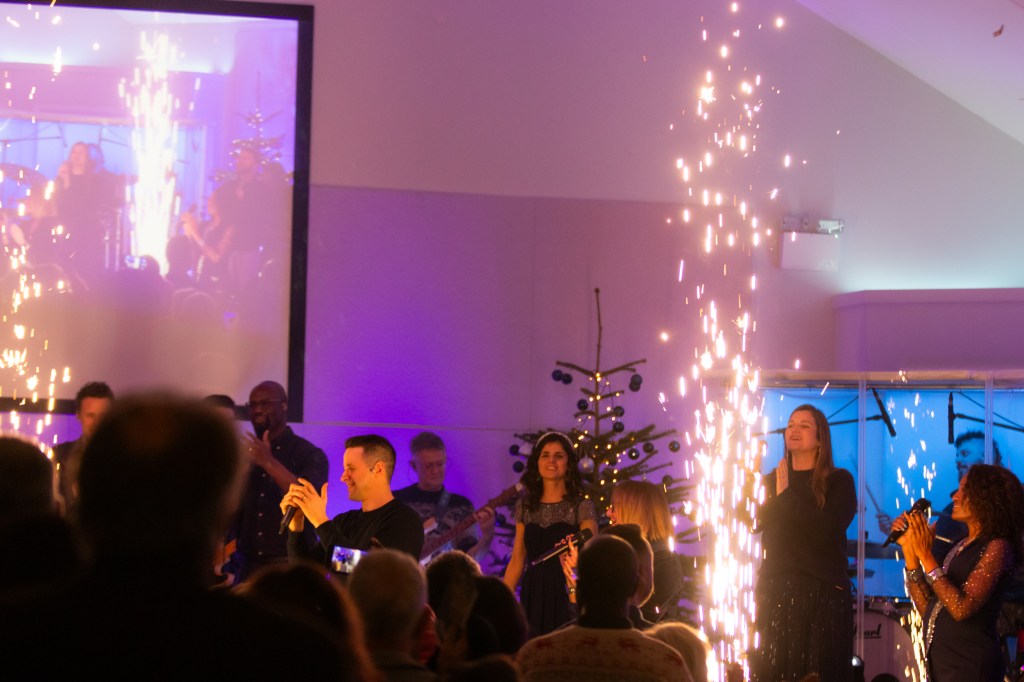
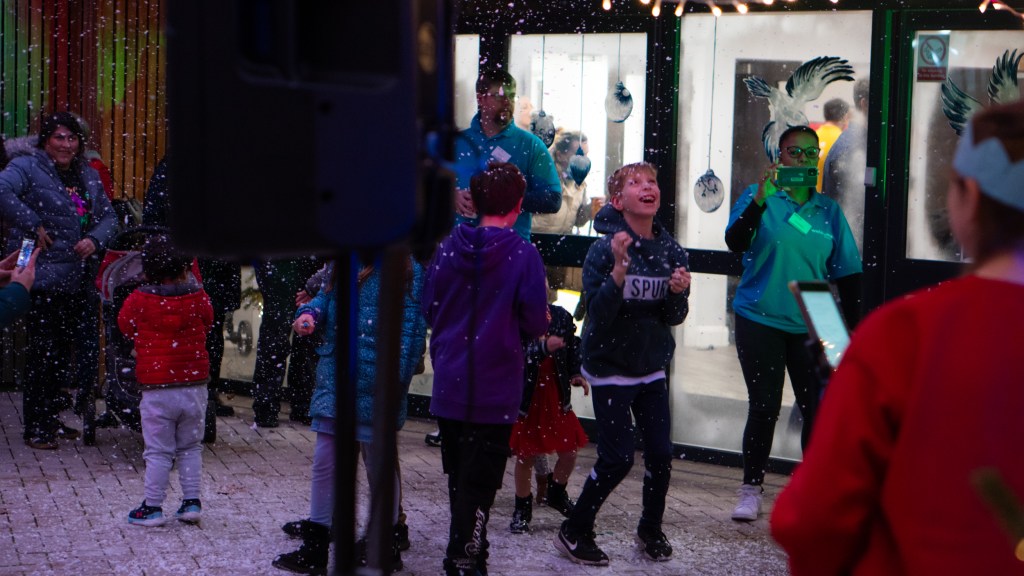
Whilst the younger children enjoyed fun Christmas parties in the front building, those of us in the chapel were treated to some incredible carols and performance pieces, alongside videos, readings and a short talk from yours truly. Somehow the event team even gave us fireworks and indoor snow! I was blown away by it all, and I’m still finding snow piled up in various places…
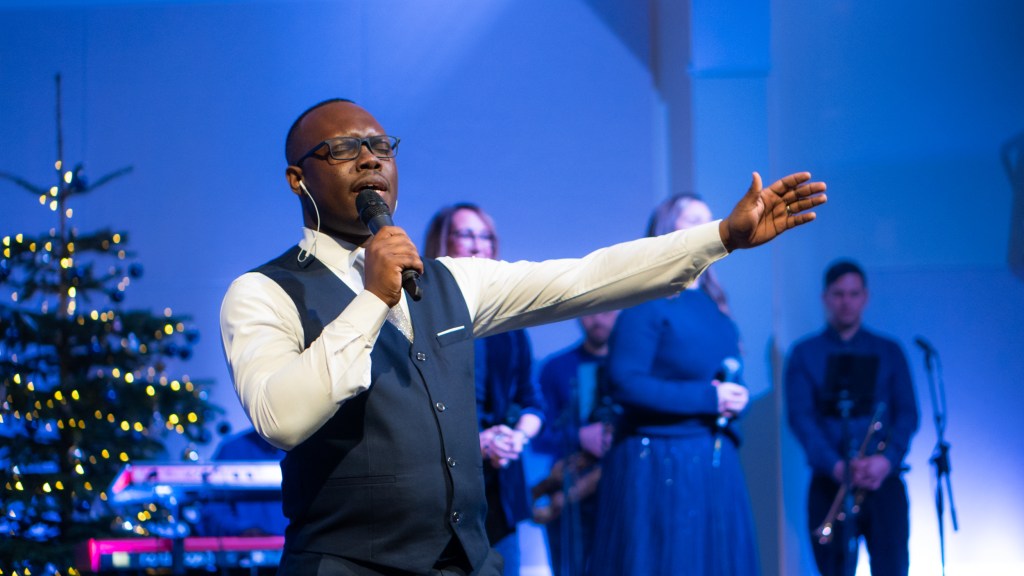
It would be unfair to single out any individual for comment, because so many people went above and beyond to make the day happen. Personally the thing that stood out to me most was the quality of our musicians and singers who knocked it out of the park time after time. To say I was impressed is a massive understatement. I’m looking forward to next year already!
If you weren’t able to attend or you just want to re-live the fun, you can watch the service for yourself on this link:
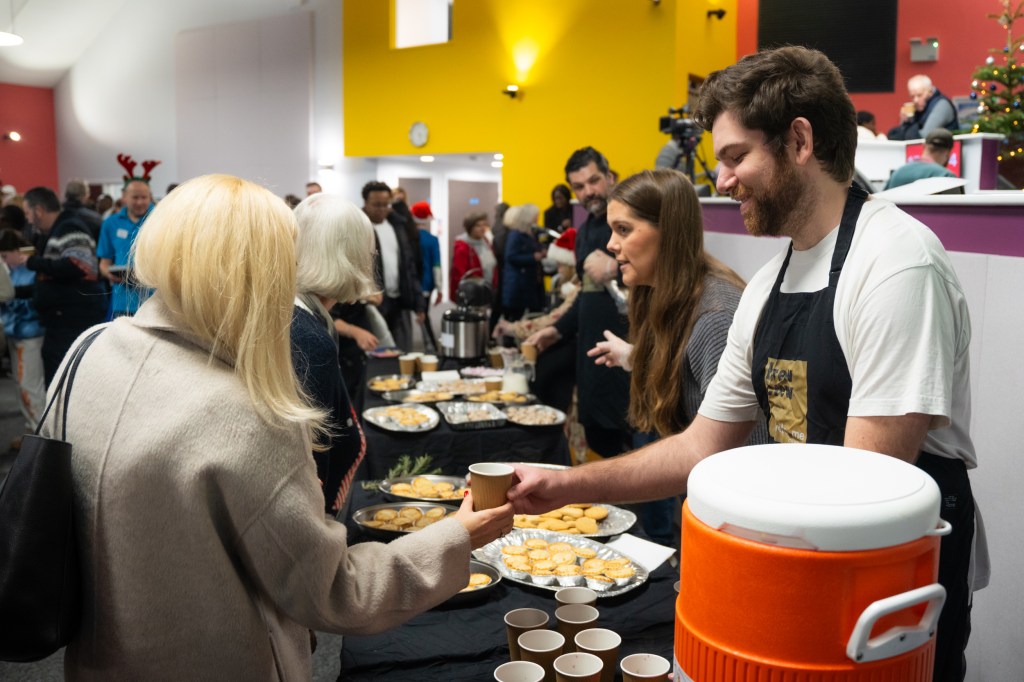
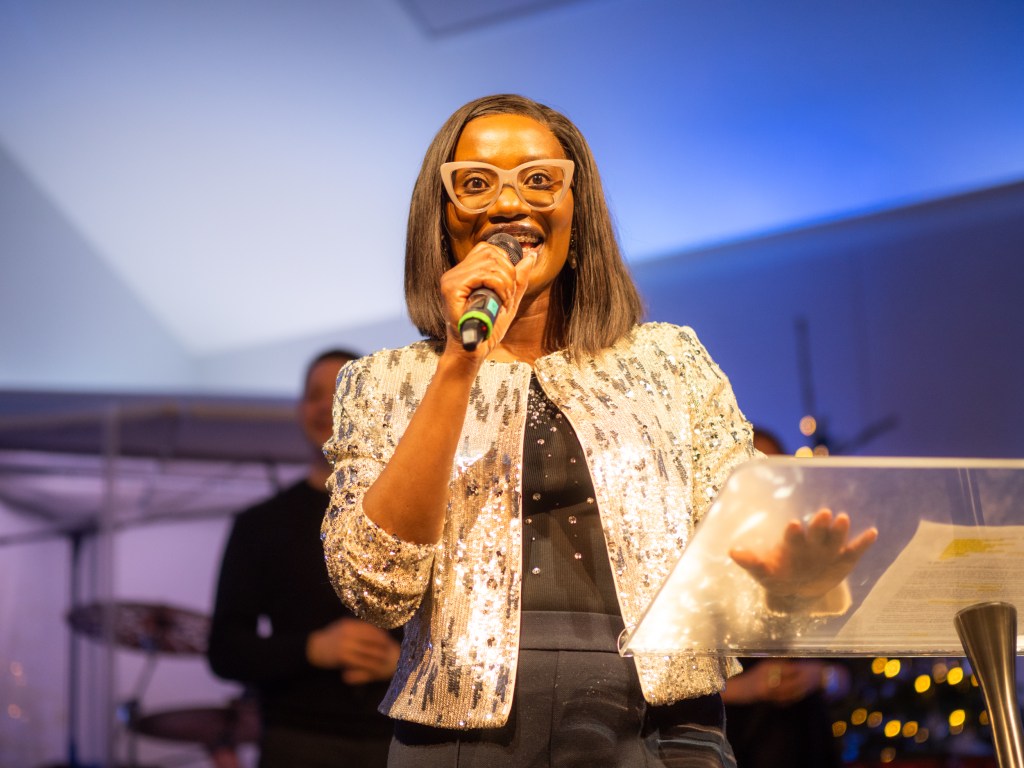
I want to say a very big THANK YOU to everyone who was involved, and who gave their time to serve in all the different ways. You are all amazing and I hope you had fun. Here are a few pics from the day too:
Christmas Dates
We have a great programme events still to come across the festive season:
Sunday 22nd December: Family Meetings at 9am & 11am
On Sunday 22nd we’re holding all age meetings, suitable for everyone. This offers us a chance to be together as a whole church family, across all the generations. Each meeting will last around one hour and we’ll have a lot fun.
Our Welcome Team and Brew Crew will be hosting us superbly as always, and our amazing Welcome Tots leaders are providing a small team to run the Tots room for any parents of 0-3s who would prefer to make use of it.
Christmas Day: join us at 10am
On Christmas Day we’ll have one, all age meeting at 10am. It will be about 45 minutes long and suitable for all. Parents: if your children would like to bring/wear a gift they’ve received there may be a chance to share it with everyone, and don’t forget to wear your own Christmas jumper too.
Sunday 29th December: no meetings
We won’t be meeting on Sunday 29th December this year. We hope you enjoy doing something festive and fun with family and friends instead.
Tuesday 31st December: Watch Night Celebration, from 10pm until 2025
We are gathering for our very first Watchnight celebration on New Year’s Eve to thank God for all he’s done in 2024, and to commit the New Year to him. Come and join us to pray, worship and celebrate!
If you’re planning to come to Watchnight it would help us if you would click here to let us know you’re coming.There is absolutely no requirement to do this – you’re free to just turn up, and I know some won’t decide until the last moment. Letting us know is simply about helping us work out a few details in terms of seating and refreshments.
Sunday 5th January 2025
We’ll be back to our usual 9am and 11am meetings on Sunday 5th, with kids and youth work in full swing too. I’ll be preaching an encouraging message to kick off the New Year and I’ll also be sharing important news about a few changes within our Staff Team. Please don’t miss it!
Welcome Church Office Closure
After a very busy year, the church offices close this Friday afternoon, 20th December. We will reopen with a ‘skeleton crew’ on Thursday 2nd January, and be back to full strength on Monday 6th. We’re all looking forward to a good break, and I hope you get one too.
Thanks for reading, and let me wish you a Merry Christmas, and a Happy New Year.
Stay connected with everything happening at Welcome Church by subscribing to this blog for weekly updates sent straight to your inbox
We would love you all to be praying for our church and for our nation in the weeks ahead. Here are a few key items to pray for during this Christmas and New Year season:
We’re running four services on the day, at 11am, 2pm, 4.30pm and 7pm. Tickets have been going fast, with over 2,300 people booked to attend so far this year. The 7pm meeting will also be live-streamed.
Please pray that the whole day goes well, that everyone involved in putting the services on would be fit and healthy, and that lots of people would connect to Jesus and come back to join us as a church again in the year ahead.
Alpha
The final night of our latest Alpha Course took place on Wednesday this week. Around 90 people completed the course with us this term, exploring the big questions of life and faith.
Please pray that we will see lots of these people connecting with us over the Christmas and New Year season, and coming back for the ‘Alpha Plus’ course in the New Year. Please also pray for many to find a personal faith in Jesus.
By the way, I want to say a special THANK YOU to all those who made this course possible, especially the kitchen and serving teams who have really gone above and beyond this term.
Church Gate
Although the actual building work has yet to begin on Church Gate, and may not start for a few months yet, lots of work is being done to get everything ready behind the scenes. We’ve had the first price estimate back on the renovation work to be done, and are now finalising what we will actually do, making sure we balance our ambitions against our budget!
The next stage will be to apply for planning permission for some of the changes, to get quotes from builders, and to apply for certain grants. Remember that our goal is to provide dedicated space for our children’s and youth work, alongside some extra social action space, and to open a Community Grocery to serve people in need in our town. We would like to see this work completed and Church Gate open in 2025.
Please pray for the all the items listed above, and especially that we would find favour with some of the grant funders, who have so far made positive noises, and please pray for the whole team working to deliver this project.
Staff Team
I would value your prayers for our staff team this Christmas. It has been a very busy term and we are currently understaffed in some key areas too. I would observe that there has been significant pressure felt by the team at certain points and everyone is tired.
We will be looking at the size and make up of our staff team again in 2025, but it will take a little time to do this well, and will also require more resource. In the mean time, please be praying for the team to be well rested and refreshed for the year ahead, and for God to provide all the finance and staff required to build the church well into the future. Please also pray for the many volunteers who give their time for free, week by week – we love and value all of you so much.
The Assisted Dying Bill
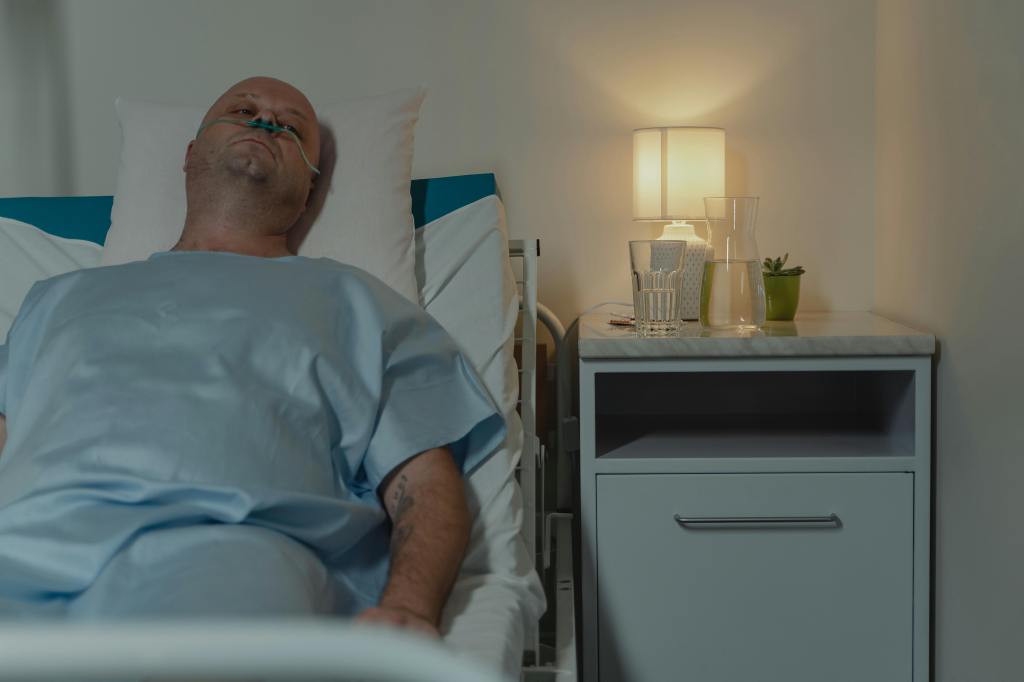
As you probably know, the Assisted Dying Bill was brought before Parliament in November, and was sadly approved. This represents a significant shift in how our society values and approaches the sanctity of life.
At this point it’s restricted to those with a terminal illness who have less than six months to live, but the pressure is already on for access to be widened, just as it’s been widened in every nation where it’s been legalised. In Canada, 1 in 20 deaths is now by this kind of assisted suicide, and in Belgium and the Netherlands it’s now legal to do this to children.
Of course this is not an easy or straightforward issue, and it stirs strong feelings on all sides, but as followers of Christ, our response must be rooted in the teaching of the Bible, and not in emotional stories. We believe in the God-given dignity and worth of every person, from the beginning to the end of life, and hold that life is a sacred gift to be cared for, even in the face of suffering.
Sadly our local MP’s in Woking and Guildford, both voted in favour of the bill. Whilst we would not expect people who don’t follow Jesus to hold a Biblical worldview, we should of course bear this issue in mind (along with the many other issues at stake!) when it’s our turn to vote again.
In the meantime I urge us to pray for all who carry the weight of making such decisions, as there are more stages to go in this bill. I encourage us to pray fervently for our nation, its leaders, and those most directly impacted by this decision. Please pray that our nation will turn away from this slippery slope towards the devaluing of human life.
Of course, we also need to consider how we, as individuals and as a church, can be a tangible source of support and hope to those navigating end-of-life challenges, and we must also show lots of love and grace to those who disagree with the Biblical viewpoint on this issue. Thank you for standing firm in your faith and for being a community that reflects the love of Christ in all circumstances.
Stay connected with everything happening at Welcome Church by subscribing to this blog for weekly updates sent straight to your inbox
Chris here – Steve has kindly allowed me to take the Christmas reins of his blog this week in order to follow up my talk on Sunday about Jesus as the Word of God. If you didn’t hear the message you can catch up here.
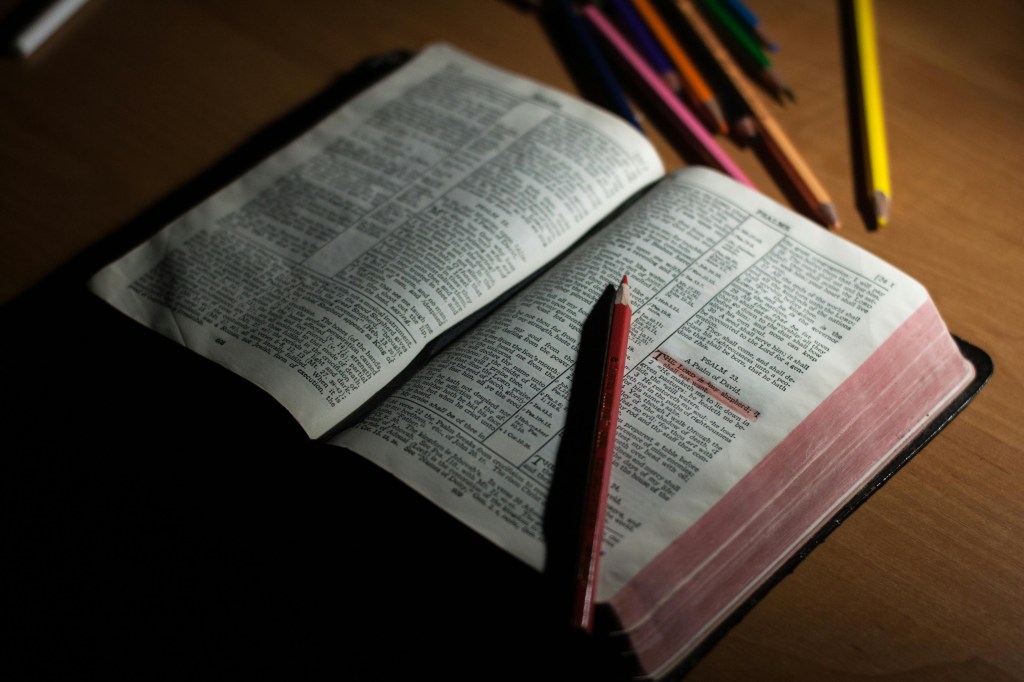
Colossians 3:16 says,“Let the word of Christ dwell in you richly, teaching and admonishing one another in all wisdom, singing psalms and hymns and spiritual songs, with thankfulness in your hearts to God”. We want to be a church in which the word of Christ dwells in us richly, and I’m sure many of you individually would want to aim to make 2025 a year where God’s Word takes greater prominence in your life.
However, given that there are so many resources available, it can be difficult to know where to start, or difficult to know where to go next. So I’ve put some recommendations together to resource you in making plans for being in God’s Word more in 2025. This is in no way an exhaustive list, but hopefully a helpful starting place.
“But I’m not much of a reader…”
You’re in good company. Engaging with God’s Word and building your life upon it is not reliant on you being bookish, academic or studious. The Bible was predominantly heard, not read, for much of the church’s history. So if you’re not a big reader, don’t write yourself off, there are loads of resources that can help you, including an increasing number of audiobook versions of the Bible. It’s also important to remember that feeding on God’s Word is not all about the reading, just as eating involves more than just shoving food in your mouth! Memorising, reflecting, discussing with others, and most importantly, applying God’s Word to our lives are key to feeding on “every word that proceeds from the mouth of God” (Matt 4:4).
Something for everyone
Whether you’re someone who is new to reading the Bible, or you’ve never had a regular practice of reading the Bible, or you’re a seasoned reader looking for a restart or a fresh challenge, these resources might be a great place to start…
Bible-in-a-Year & other reading plans
A structured programme of reading can be an invaluable help to get going with the Bible. Reading the Bible in one year will take you roughly 10-15 minutes of reading per day, which is manageable for almost everyone. The most famous plan is the Robert Murray M’Cheyne reading plan, developed by the 19th Century Scottish Pastor. You can print the plan and use your own Bible, simples! You’ll read sections from the Old Testament, New Testament, Psalms and Proverbs, which helps when reading through trickier sections of the Bible (hello Leviticus!).
However, if you want a ‘one-stop-shop’ reading plan in a book, you can buy a Bible split up into the reading plan for each day of the year. The One Year Bible makes this very easy to follow, and it comes in various translations – more on that below!
However, my personal preference is for a 5-day reading plan, rather than a 7-day reading plan. I’ve found it helpful to have the weekends to catch up any readings I’ve missed without feeling guilty or worried that I am ‘getting behind’! Five-Day Bible Reading is a free resource that structures this for you, and is one of the most popular plans around.
If you know you can commit to reading for a bit longer, I thoroughly recommend a long-form reading plan. These lead you through the Bible in shorter timeframes, meaning you’ll read for between 30 mins – 1 hour a day. On a 5-day reading plan, 12 chapters a day will get you through the Old Testament in 90 days, and 6 chapters a day will get you through the New Testament in 60 days. The benefit with this approach is that you make rapid progress (which is encouraging!), but also that you read the Bible in bigger narrative units, enjoying the full scope of each book, and enabling you to pick up on the big picture themes of each book. You can find various plans online that take this approach, like this New Testament one here.
Finally, if you fancy reading in your own time at your own speed, but would really like to track your progress through the Bible, this is a great resource to print out and keep inside your Bible cover.
Which Bible translation is the right one?
There is no one translation of the Bible that is ‘right’. The Bible was not written in English, and so we rely on Bible translators to be able to understand God’s Word in our mother tongue. However, translation is not straight forward, as anyone in our church who speaks multiple languages will tell you, especially when it comes to idioms, phrases, sayings, poetry and prophecy!!
So what’s the difference? Mainly it’s in the approach each translation takes and what they are hoping to achieve. Some Bibles aim translate the original text on a word-for-word basis, like the English Standard Version (ESV). These are better if you are doing a close reading of a passage or book, but do tend to be harder to read, as they are aiming for a literal translation rather than a text that reads intuitively.
Other Bibles aim to translate the meaning of the text on a thought-for-thought basis, like the New Living Translation (NLT). These sacrifice some accuracy on the individual words, but are much more fluent to read and are generally easier to understand, because the emphasis is on capturing the meaning of the text.
Right in the middle of these two approaches sits the New International Version (NIV), which is the version we tend to use on a Sunday, as if offers you the best of both worlds. If you don’t know which one to read, just read the NIV!
Everyone loves Eugene Peterson’s ‘The Message’, which I highly recommend, and consider a work of genius by a highly esteemed pastor and artist – but just remember that it’s not a ‘Bible translation’ in the strict sense, as Peterson allows himself a lot of freedom in communicating each text he transliterates.
Devotionals
A different way of engaging with the Bible is to use a devotional, which gives you a Bible verse each day, as well as a short reflection written by a pastor or author, that helps you reflect on the verse. A devotional resource is really a ‘jumping off point’, that helps you get going before the coffee has hit your bloodstream!
Me and Sarah have enjoyed dipping in and out of The Way of Wisdom by Tim & Kathy Keller, which is a highly insightful way to read, discuss and pray through the Wisdom writings. The Kellers also wrote a devotional called My Rock, My Refuge which walks through the Psalms. A classic devotional is My Utmost for His Highest by Oswald Chambers, as is The Promises of God by Charles Spurgeon, or you could look at Everyday Gospel, by Paul David Tripp, which tracks alongside a Bible-in-a-Year reading plan. The very talented and inspiring Jackie Hill Perry has recently published a 60-day devotional called Upon Waking. I’m sure there are hundreds more that others could recommend, so please don’t be offended that I haven’t mentioned them all!
A devotional is no substitute for reading the Bible yourself (don’t outsource – you can do it!), but it can be a really helpful tool for reflection and applying the Bible to your life. God wants us to live by his Word, and to grow closer to him through his Word, not just become more knowledgeable of his Word.
Bible Studies
If you’re looking go deeper into one book of the Bible (rather than further through the scope of the Bible), you’ll probably want to pick a book and read a more in-depth commentary on it, to help you see beneath the surface. We should not expect the Bible to be simple to understand all the time – it is the most profound book ever written! Many of its riches are buried beyond what first meets the eye and a skilled pastor or author can help you see what you’re not already seeing.
I’ve found these two series of study books enjoyable, readable and helpful in going deeper, as well as applying the Bible to everyday life.
If you’re looking for a different global perspective on the Bible, I would highly recommend Jesus Through Middle Eastern Eyes by Kenneth E. Bailey, who brings together Middle Eastern interpretation and insights that are eye-opening.
Memorisation, Q&A and AudioBibles
I have found memorising Scripture to be a game-changer for how God’s Word comes alive in me. I first came across the Topical Memory System many years ago, which I inherited from someone, somewhere, in a tatty old version of the book. The idea is simple: you are given 2 verses each week that are connected thematically (e.g. 2 Corinthians 5:17 and Galatians 2:20), and you are helped to memorise those verses with tear-out cue cards.
Once memorised, you can then spend time reflecting on the verses, and gradually over the weeks you build up your own internal library of Bible verses. Here’s the irony: I’ve never got very far into the weekly plan! Maybe 2025 will be my year?! However, what I can confidently say is that all of the verses that I memorised years ago I can still remember now, and they are still benefitting my walk with God. Once you’ve really learnt a verse, you’ve got it for life. There are other versions of this book, and other books about the science of memorisation, but if you want to keep it simple, stick a verse on your fridge/bathroom mirror/child’s forehead, and try to memorise it through the week!
Alternatively… There is a different kind of memorisation approach that the church has used historically to teach Bible beliefs, (rather than Bible verses), called ‘catechesis’, an odd word which simply means ‘question and answer’ teaching. A ‘catechesis’ is a set of 50-150 questions and answers that cover the key teachings of the Bible as a whole. Here’s an example from the very famous Westminster Shorter Catechism:
Q:What is man’s chief end in life?
A:Man’s chief end is to glorify God and enjoy him forever
You learn the question, and the answer, and then reflect/discuss the content.
Because these catechisms come from a different era, their language can be an obstacle for a lot of people, but there has been a renaissance of this memorisation approach recently and this year I’ve dipped into the New City Catechism Devotional, which is highly accessible and superbly put together, with a Q&A for each day, and some devotional writings, ancient and modern, alongside. Lovely stuff!
Finally there are an increasing number of superbly produced audiobook versions of the Bible. The ESV online platform is truly impressive, offering not just one audiobook, but your choice of a range of different readers, including Michael Reeves, Ray Ortland, Kristyn Getty and Jackie Hill Perry. It’s like the old days of sat nav where you could choose your voice! David Suchet has done a version of the NIV on audio, which comes as both a whole bible, or in the Bible-in-a-Year format. You can access this on Audible, Spotify, Apple Music or buy it hard copy online.
Mobile-Bible or Phoning it in?
On Sunday I was a bit disparaging of Bible resources that are available on your smart phone! I’m aware that for some people they really enjoy and rely on excellent resources that they access on their phone. The YouVersion Bible App is completely free and has been downloaded by a bazillion people, and has all kinds of reading plans to help you make progress. Personally, I use the Logos Bible App, because it syncs well with other digital study resources that I use.
However, my pastoral concern about smart phone resources is a fairly obvious one. Smart Phones are distraction centres and highly addictive, and our society is gradually waking up to this reality, especially in managing young people’s use and access. Wisdom therefore should tell us that if we want to spend more quality time with God in his Word, we will put the phone out of reach and pick up a hard copy Bible that will not notify us of anything else that is going on in the world!
Research has shown that to stop your brain thinking about your phone it needs to be put away, in a drawer or a bag. It’s insights like this that make me highly skeptical of a Bible reading plan that relies on me using my phone a lot. I just don’t trust myself! That’s not to set any kind of rule for anyone else – perhaps you’re a commuter and you find using your phone the best way to remember your reading for the day – crack on I say! But let’s be wise and remember our aim is not simply convenience or ticking a box, it’s communing with the Living God!
Reading with Kids
Lastly, I just wanted to add a section here for those who are raising children and might want to think about doing something new as a family, or 1-on-1 with a child.
Kids Bibles come in different forms. Some are Bibles i.e. they are fully translated versions of the whole Bible. Others are Storybooks, where they tell the stories of the Bible in contemporary English that is child-friendly. Both of these approaches are excellent resource for young readers.
For a Kids Bible, I would highly recommend the NIrV version, where the ‘r’ stands for ‘readers’. It’s the NIV translation, but rendered in such a way for young readers or those for whom English is a second language. It’s highly readable for children, and comes in various forms. You can buy the plain text like this, or a far more exciting illustrated version like this.
For a Storybook Bible, I love the Jesus Storybook Bible, which is also available on audiobook, read by the marvellous David Suchet – a ‘classic’ in my house, find it on Spotify, Audible etc. Then there’s Kevin DeYoung & Don Clark’s The Biggest Story which is stunningly written and illustrated, and I’ve heard people enjoy the Action Storybook Bible which is laid out like a comic strip.
For memorisation and Q&A, there is the Topical Memory System for Kids, and there is also a New City Catechism for Kids, which comes in a tiny little book and is about £2! These would definitely require more parental involvement, but that can be a great source of fun and a challenge to do together.
May God bless you as you read his Word in 2025, and remember that God really wants to speak to you – you don’t need to twist his arm! God has spoken to us through Jesus, let’s be eager to listen to him this year.
Stay connected with everything happening at Welcome Church by subscribing to this blog for weekly updates sent straight to your inbox
On Friday this week (29th November) there’s a vote in Parliament about legalising ‘Assisted Dying’, which, in summary, means allowing and helping people who are terminally ill to end their life ahead of time.
This is not about switching off life-support for someone who’s already brain dead, or about ceasing active medical treatment and allowing events to run their natural course; this is about active intervention to end someone’s life early. It’s a form of euthanasia, although calling it “Assisted Dying” makes it sound a little more palatable.
This is of course a deeply sensitive issue, and we must approach it with compassion and care. Many of us will have seen loved ones facing the challenges of illness and suffering. Some will have been in pain. At times like that, the idea of assisted dying could seem like a merciful option.
Your life has value
As Christians, we believe that every life has intrinsic value because it is a gift from God. Age, disability or illness do not diminish that value. Every life, no matter how frail or broken, is precious to God. He is the Creator, and He alone has authority over life and death.
Psalm 139 tells us that God made our bodies and that He knew us before we were even born. As v16 say, “All the days ordained for me were written in Your book before one of them came to be”. God has a purpose for our life, and He even has a purpose in our suffering.
As Christians we’re called to protect and care for those who are vulnerable, not to hasten their end. Whilst we understand the pain that leads to these debates, we must stand firm in our belief that life is valuable, even in suffering, and that we’re called to protect it. God’s Word reminds us in Deuteronomy 32v39, “There is no God besides me. I put to death and I bring to life”. It is not for us to choose to end our life, even when there’s pain.
The truth is, assisted dying is incompatible with a Biblical Christian world view
Take some action
The vote on Assisted Dying takes place this Friday. I want to encourage you to write to your Member of Parliament early this week (e-mail is easiest) asking them to vote against this bill. If you can, please pause and do it right now. Let’s clearly communicate the depth and the strength of feeling there is on this bill.
Remember as you write that our goal is not to condemn those who support the bill, but to stand up for a more compassionate, life-affirming approach. Let’s be a voice of love, dignity, and truth in this debate. Let’s appeal for better end of life care.
Some Real Concerns
This Bill was only published at 10pm on Monday 11 November, giving MPs barely two weeks to scrutinise this significant and complex change to legislation before it goes to a vote. Many believe this is a poorly drafted bill, lacking in safeguards for the vulnerable. It hasn’t even been given time for real debate, and will have had little more than 5 hours scrutiny in Parliament before MP’s vote.
Disability campaigners and those working with women in abusive relationships have highlighted the danger of unintended consequences should the law be changed.
The Health Secretary Wes Streeting has spoken out against it. He came under pressure for speaking up which, bearing in mind it’s supposed to be a free vote, is interesting.
The Justice Secretary Shabana Mahmood has also spoken out calling it “a slippery slope to death on demand”.
The former Prime Minister Gordon Brown has also spoken out against it.
Senior figures representing Christians, Muslims, Jews, Hindus and Sikhs have warned in a joint letter that the assisted dying Bill will lead to people being pressured into ending their lives to avoid burdening families or the NHS. They say a change in law will turn a “right to die” into people thinking they have a “duty to die”.
Supporters of this bill say that safeguards are in place to protect the vulnerable, but everywhere in the world where this has been legalised the safeguards have soon crumbled. It starts as a Bill that just affects the terminally ill, but even in the UK there is already pressure that what is being proposed is too restrictive and that the safeguards should be moved.
In most countries the removal of safeguards usually happens not though the government but through the courts, as people appeal to laws on ‘human rights’ and ‘equality’. The slippery slope will be no different here in the UK if this bill is passed.
The pattern around the world has been similar in many places: first the terminally ill… then those who are suffering long term illness… then that’s expanded to included mental illness… then people with disabilities. In The Netherlands it has been extended to include children from 12 to 16 years of age with parental approval (Over 16’s need no such parental permission). In Canada they have even offered Assisted Dying to the Homeless and the Unemployed.
To help understand this better you could watch the BBC documentary, Better Off Dead, which is currently available to stream on I-player.
Life is worth living
We live in a world that often treats life as something we can control, and therefore something we can end when it no longer feels meaningful to us. It endorses the lie that some lives are not worth living, and that suffering or disability makes a person less valuable.
Last week, as we baptised 21 people at Welcome Church, one of them said this in their testimony: “Last year, when I was making another attempt to end my life, I heard a very strong voice coming through and saying: You did not bring yourself here. You found yourself here and you do not have the right to take yourself off here. After that I felt warmth around me, and I cried, not because of my misery but because I realised Jesus was there with me, saving me from myself”.
A life made in the image of God is a life worth living, even when there is suffering.
Waiting to hear back
I have written to Will Forster to express my concern. I have not yet heard back from him but I will let you know when and if I do, and I’ll let you know how he votes on this issue. As Christians we should certainly remember these kinds of issues when it’s our turn to vote again.
I encourage you again to consider writing to your MP right now today, asking them to vote against this Bill. This is an important issue. It directly affects the most vulnerable in our society.
Let’s take action in love and truth, to affirm the value God places on every human being. And let’s remember, Jesus never dismissed suffering as unimportant. In fact, Jesus walked through the ultimate form of suffering, on the cross, experiencing the pain and brokenness of our world, in order to give us hope, healing, and eternal life.
And now we’re are called to be agents of mercy, walking alongside people in their suffering, and pointing them to a hope that transcends all the struggles of this life.
Stay connected with everything happening at Welcome Church by subscribing to this blog for weekly updates sent straight to your inbox
As a church we’re starting something new this year: on December 31st, New Year’s Eve, we will hold a ‘Watchnight Celebration’ at Welcome Church.
This is an event we’ve been asked to consider for a couple of years now, especially by those among us from African or South American backgrounds. This year – to much excitement – it’s happening.
The aim of the evening is to celebrate together, to thank God for the year we’ve just had, and to submit the New Year ahead to Him.
The evening will include a mix of vibrant worship, testimony, prayer, celebration and more as we see in the New Year together. It’s open to all people of all ages – anyone who is happy to stay up late and join in as we celebrate.
After too many years spent watching the fireworks on TV and half-heartedly singing Olde Lang Syne, I’m ready for something new. Bring it on!
The event will start with refreshments as we arrive from 10pm onwards, and will finish at about 12.30am. Watch this space for full details of timings, but for now please be encouraged to put the event in your diary and dig out your dancing shoes.
I can’t think anything more valuable to be doing as we kick off 2025 together!
Stay connected with everything happening at Welcome Church by subscribing to this blog for weekly updates sent straight to your inbox
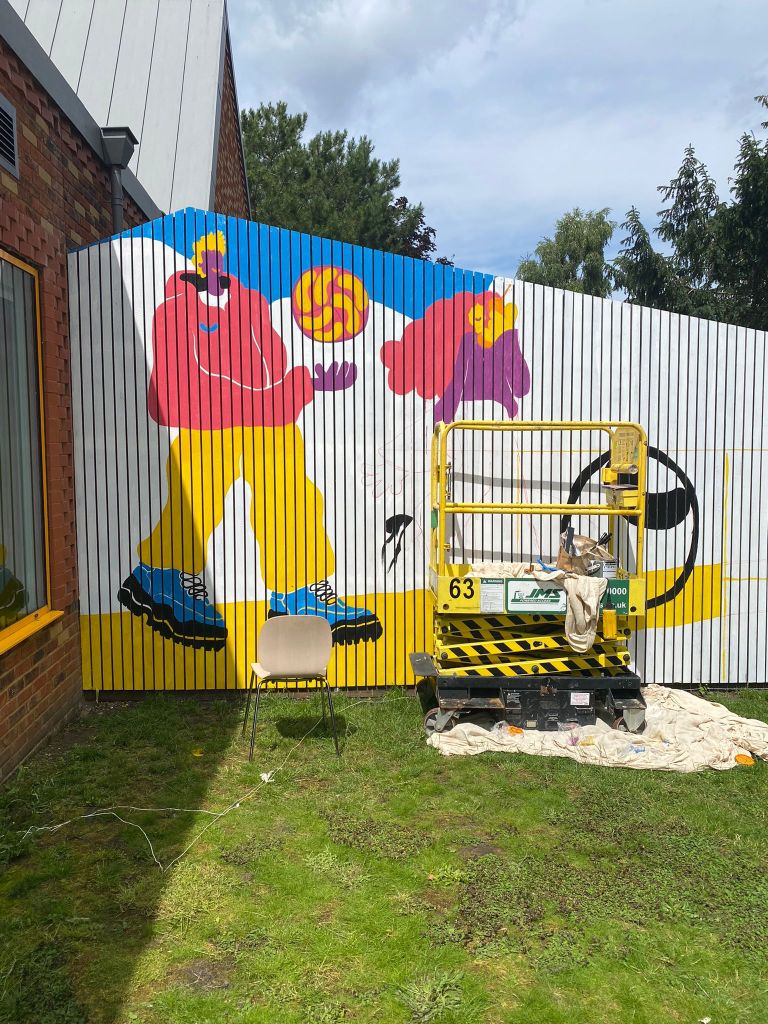
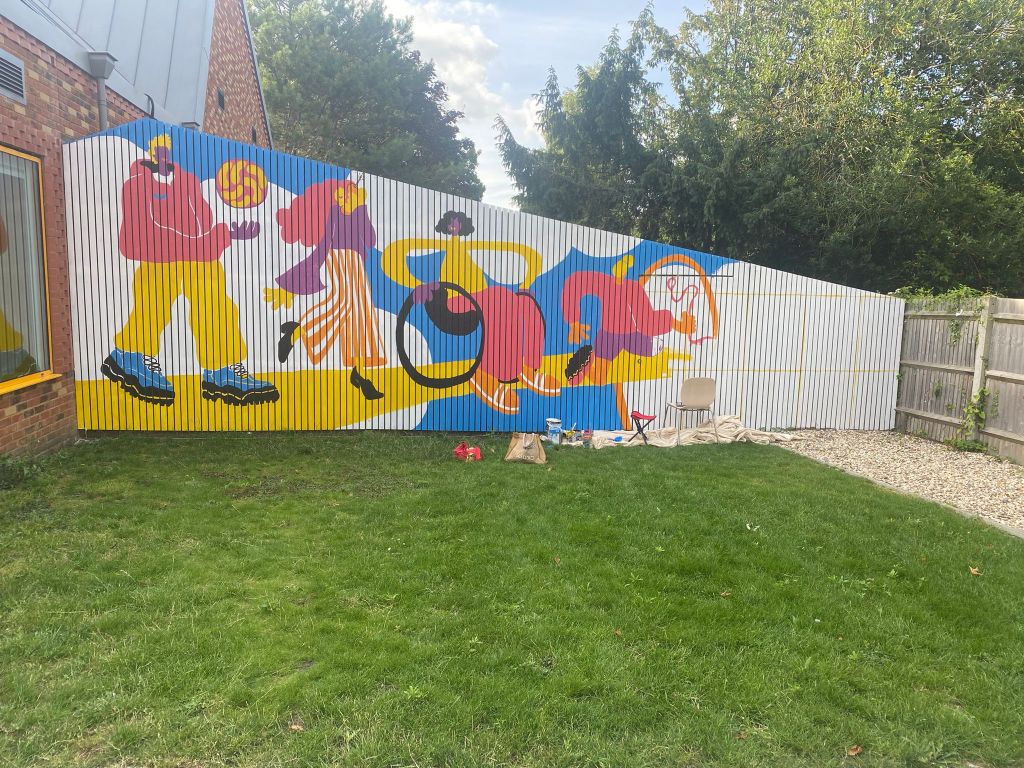
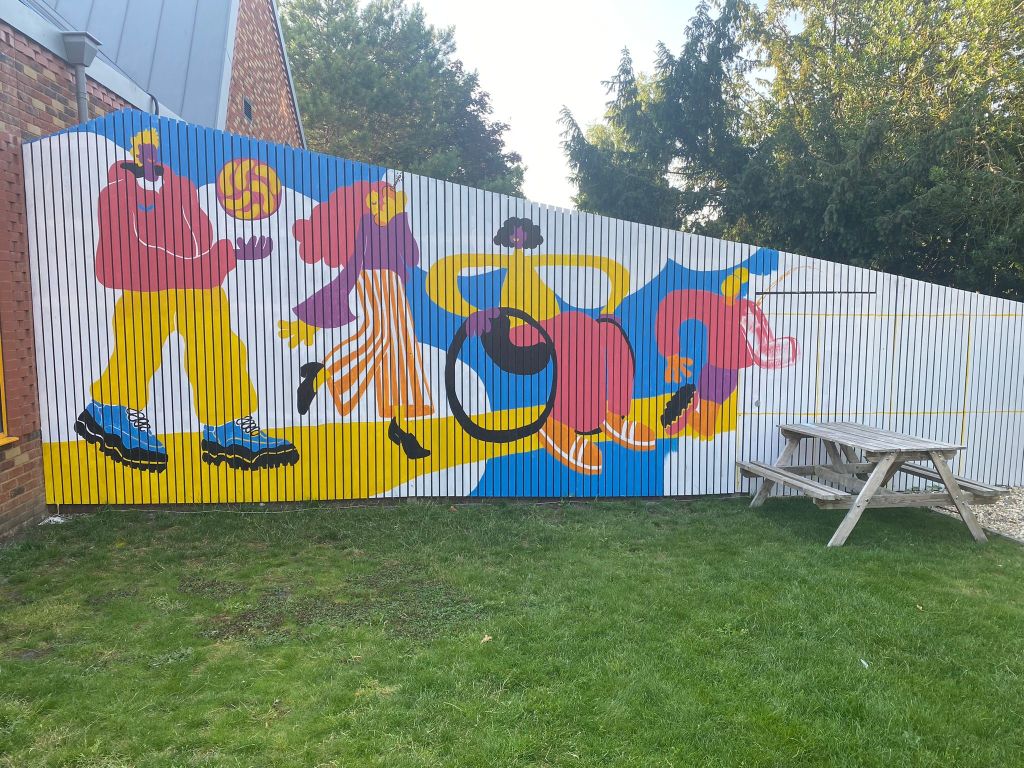
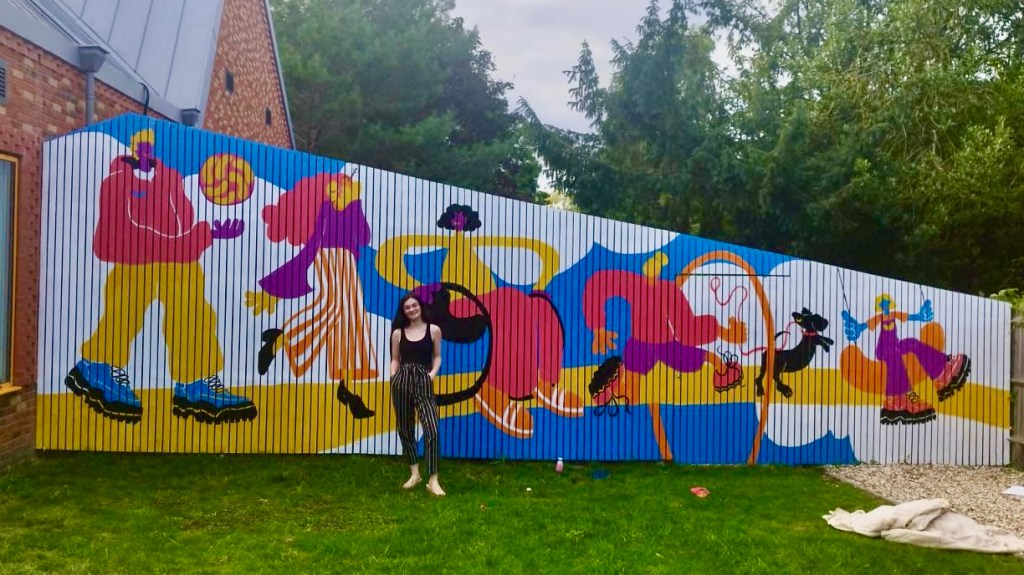
You may have spotted it already, but if not please take a moment, perhaps on Sunday, to check out our new Welcome Church mural:
The Yellow Brick Road
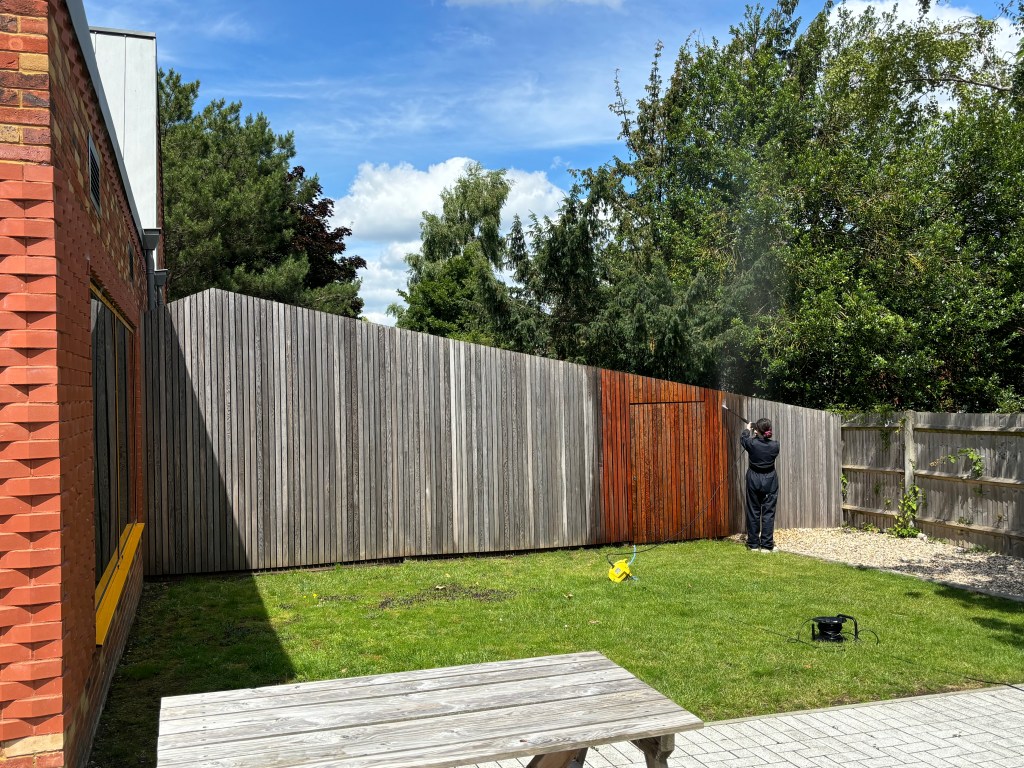
The mural was created by Sophie, a brilliant local artist, who is both an art teacher and a key part of our Welcome Church worship team. She was ably assisted by Claire, by Owen and by some others at various points along the way. The mural is located on the fence outside the Welcome Lounge.
The thinking behind the mural was to help point us towards Church Gate, where we look forward to having lots of new space for our children’s and young people’s work soon.
At the right moment the fence between the two properties will be gone, and a way through will be created. In the meantime Sophie has created this ‘Yellow Brick Road’ that shows the way whilst we wait for the work on Church Gate to be done.
Below are a few pics of the mural in progress, followed by a 45 second time lapse video that shows the whole job being done from start to finish.
On behalf of us all, I want to say a big THANK YOU to Sophie, who gave her time and creativity for free this summer to serve our church in this way. It’s a lovely result and to me it speaks deeply of our Welcome Church values of ‘Belong, Believe Become’ and ‘It Matters That You’re Here’. It also speaks of the value that we ascribe to our ever growing work with children and young people.
Make sure you take a really good look at it soon. Enjoy!
Stay connected with everything happening at Welcome Church by subscribing to this blog for weekly updates sent straight to your inbox
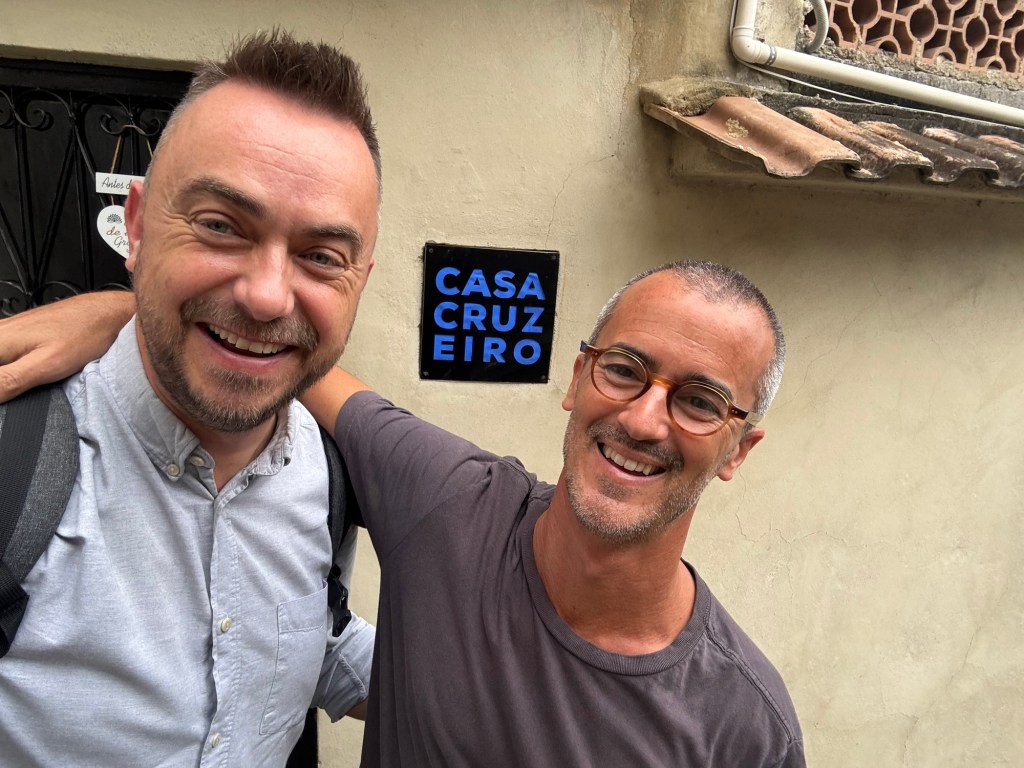
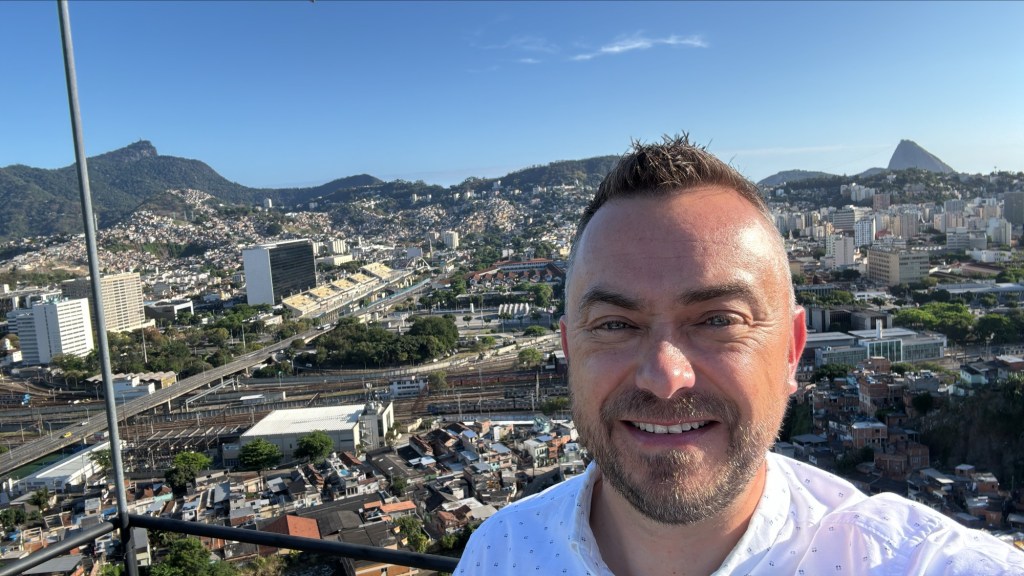
I’m writing this blog post from Rio de Janeiro where I’m currently visiting Casa Cruzeiro, a discipleship house based in one of the favelas above the city. I’m here with Andrew Shore from the Commission church in Porto, Portugal who helpfully also speaks Portuguese and has been here several times before.
The team at Casa Cruzeiro is led by Luke Simone, who is part of the Welcome Church family, but has been living in this favela for the last 10 years founding and leading this ministry. Luke has built a great team here with a mix of local people, some of whom have come to faith through this ministry, and others who have felt called by God from other nations to live and serve here in various ways.
Life in a slum
There are many great churches in Brazil, including in Rio, but reaching into the favelas requires a completely different kind of approach. A ‘normal’ style of church ministry is simply not able to come here, and 99% of Brazilians would not want to come here either. These parts of the city are quite literally outside of the law. They are run by drug gangs who watch very closely who comes and goes, and will fiercely guard their territory. You can’t just come in here and start knocking on doors or giving out invitations to Alpha.
On my first day here three different members of the local drug gang, each of them armed, came to the door of the house to talk to Luke about various matters. It’s by the miraculous grace of God that Luke has been given a unique permission to carry out this ministry, by the drug gang who run the favela, and he could be told to leave at any time.
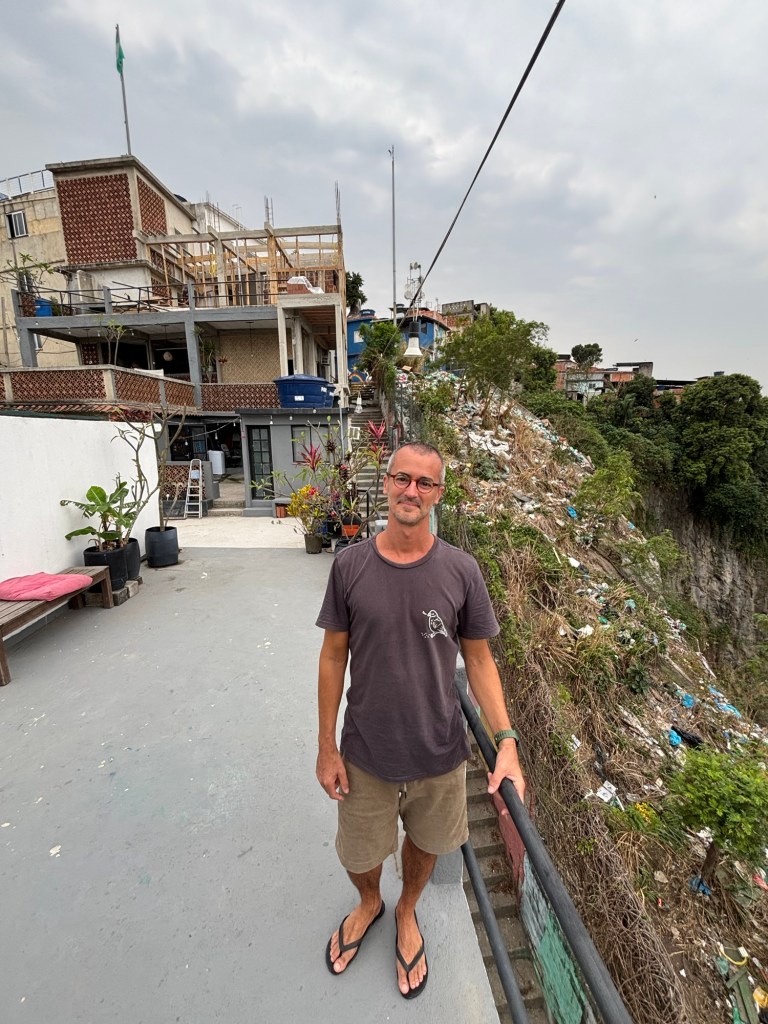
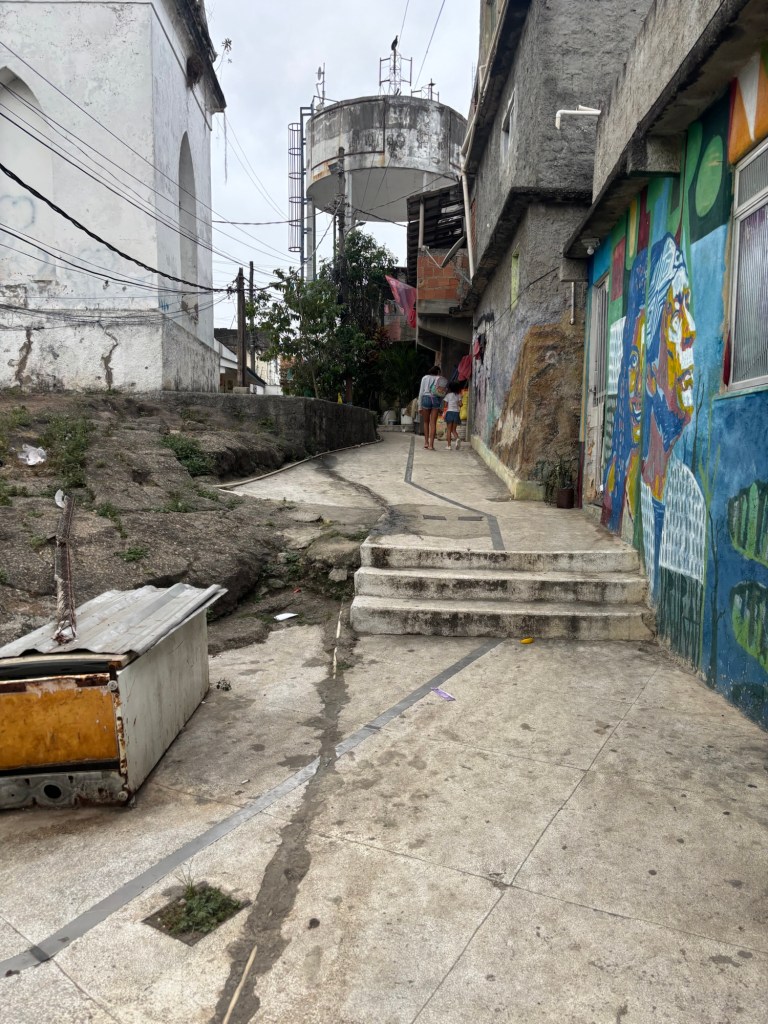
Of course, most of the people who live here are regular Brazilians trying to live as normal a life as possible, but forced to do it at a level that is sadly just one step removed from being homeless and living on the street. The houses in the favela are illegally built on land they do not own. Some are not much more than shacks, although others are better than that. Water and electricity are sourced by illegally connecting to the mains where you can. Rubbish is piled in a heap down the mountain side. The smells are certainly interesting!
This is a place where the police do not usually come, and crime here is not investigated or the law upheld. It’s certainly the first place I’ve been where you can see people who are not the police openly walking around with a machine gun strapped to their chest.
The mission of Casa Cruzeiro
At its most basic level, Casa Cruzeiro is a discipleship house where Luke and the team are trying to share the gospel and live out the life of Jesus – being a light in a dark place. Fundamentally, Luke is a missionary trying to share Jesus and make disciples in a place where planting what we might usually recognise as a church, is simply not realistic or even possible, but where the fundamentals of what the church should be are being lived out in a different way.
Luke says that what he is doing here is long term missionary work, working with ‘the least, the last and the lost’, with a goal to make disciples who will then go on to make disciples who will make disciples. It’s slow progress, worked out through incarnational living in a place where few dare to tread but where God has opened a door that everyone had said was impossible to open.
Working in partnership
Beyond our own connections, it’s great to see some partnerships with other agencies starting to form here too, not least with The Message Trust who are now starting a work here in Rio De Janeiro. It was a privilege to chat with Andy Hawthorne, who leads the Message Trust internationally, at one of the house lunches this week. He was out here launching their new work in this city. The Message Trust are the people behind the initiation of Community Groceries in the UK, so as a church we are already in regular conversation with them about our planned Community Grocery.
Another growing partnership is being formed with Christ Church, an HTB church based in the centre of Rio. A group couple from that church, with two young children, will soon be moving into the house to add their support and gifting into the mix. They will be the first family to live within Casa Cruzeiro.
Life transformed through Jesus
At Welcome Church, our vision is to see life transformed through Jesus. I’m very excited to see someone who is part of our church family bringing that vision into being in a place like this. I’ve heard some incredible stories here and met some amazing people, with transformed lives, who have encountered Jesus through this ministry and are now being discipled.
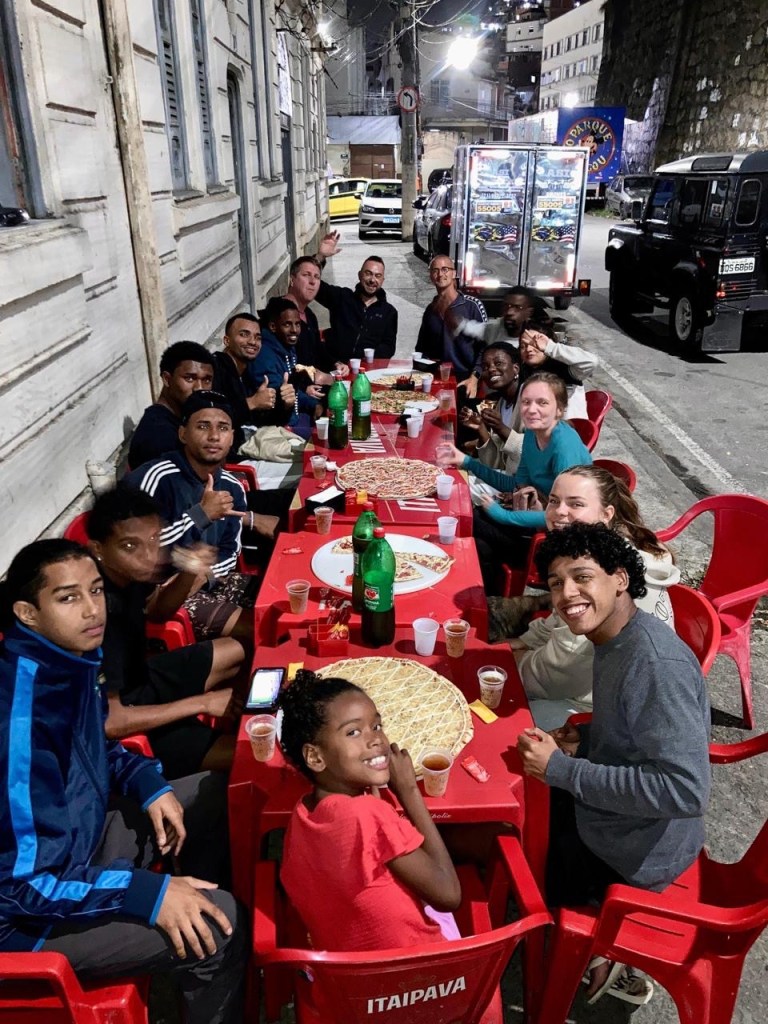
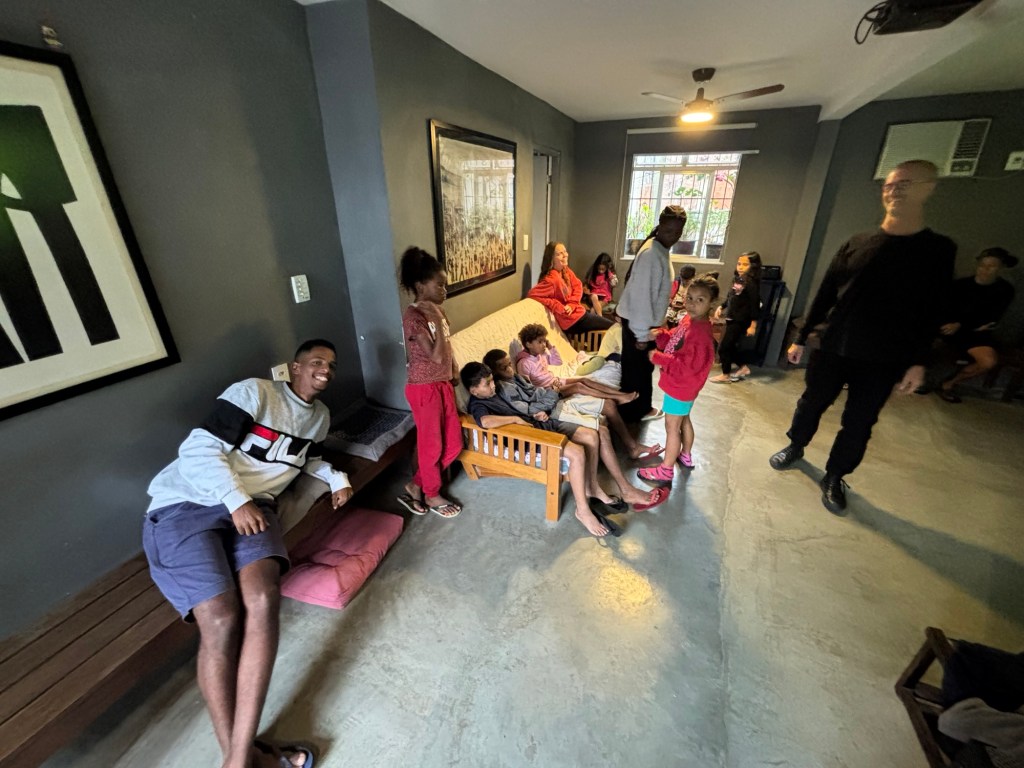
Many of the people they serve here day by day are children and young people. One key aspect of what they do is to create a ‘safe space’ away from the streets of the favela, and away from home situations that are often difficult or abusive.
Another part of what they do is giving the kind of care and advice that loving parents ought to be bringing, but is routinely absent. Building relationships of trust also enables faith based discipleship conversations to begin and for the gospel to be shared. Some of the young people have even gone from living in difficult situations in the favela, to living here in this house where disciples are being made.
The team have also now built a three story ‘school’ next door, with a classroom on each level. In this ‘school’ some local Brazilian teachers are employed to teach the children, in after school sessions, to fill in the gaps of what is often a missed or poor education. They are looking to instil hope, and a potential future beyond the slum, in young people who might otherwise grow up without it and live to repeat the cycle of the generation before.
Christian discipleship here is itself a very slow process with regular setbacks and challenges along the way. Despite this the work continues to go forward day by day, and some of the seed has been sown in very fruitful soil!
I look forward to talking about more of what I’ve seen when I get home. In the meantime, do pray for the safety and blessing of everyone here. Please pray for God‘s ongoing provision for this work too – provision of finance, of people, of Holy Spirit power, of protection and of God’s grace.
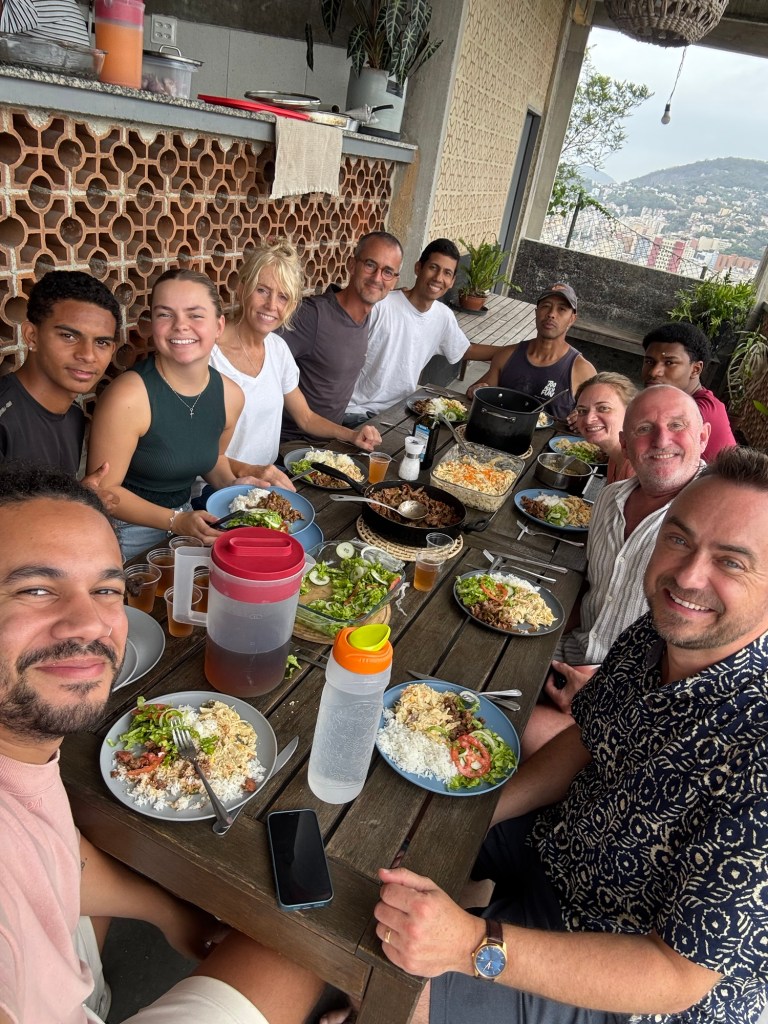
I’ll post a few photos at the end of this blog, though sadly they will not do justice to what’s going on here.
Stay connected with everything happening at Welcome Church by subscribing to this blog for weekly updates sent straight to your inbox
Hi everyone! This is Dub Everitt, Outreach Pastor at Welcome Church. I’m jumping in on Steve’s blog this week to share our exciting Autumn outreach strategy:
We’re currently in the middle of a powerful preaching series titled “Loving People Towards Jesus.” Throughout this series, we’ve been reminded that Jesus is passionate about reaching people who don’t yet know Him—and He calls each of us to play a part in that mission. We are called to reach out in love, on His behalf, to the people around us.
In previous years, our church has hosted incredible invitational events like Fun Days, Firework Nights, Carol Services, and our special Invite Sundays. These “Hop, Skip & Jump” events connected hundreds of people to Welcome Church, with many deciding to explore faith further through Alpha or by attending our Sunday services.
This year, however, we’re shifting gears. Instead of large invitational events, we’re focusing on empowering each one of you to engage personally with the people in your world through a simple and memorable approach:
EAT, PRAY, LOVE
No, we’re not talking about the book or the movie! These three memorable words are designed to help us all focus on a clear, three-step outreach strategy for this term.
1. EAT…
… at A Taste of Alpha and during our Autumn Alpha Course This year, we’re inviting everyone at Welcome Church to experience Alpha for themselves at a special event called A Taste of Alpha. It’s a fantastic opportunity to enjoy a mocktail, watch an episode from the new Alpha Film Series, and discuss it over a delicious two-course meal.
This event gives you firsthand experience of what your friends will encounter if you invite them to Alpha. We’ve already seen hundreds attend, and if you missed it, there are limited spots available for Wednesday, October 2nd. Click here to book your place for 2nd October
Once you’ve experienced A Taste of Alpha, we’d love for you to invite a friend to Try Alpha on Wednesday, October 16th—the first week of our eight-week Alpha Course. Your friend can check it out and, if they enjoy it, they’re welcome to continue for the remaining weeks! Click here to book for Try Alpha
2. PRAY…
… for your friends Many of us have already made a list of three or more people we’re praying for daily. If you haven’t done so yet, take a moment now—ask God to bring to mind three people He wants you to pray for daily, and write their names down.
It’s a powerful thing to remember that God not only hears our prayers but also moves in the lives of the people we lift up to Him. Before you speak to your friends about God, speak to God about your friends!
3. LOVE…
… your friends towards Jesus Sometimes, sharing Jesus with others can feel like a daunting task. But perhaps a better way to think about it is this: Jesus has given us people to love towards Him.
During His time on earth, Jesus poured out love, kindness, mercy, and compassion to everyone He encountered. Now, He asks us to reflect that same love to those around us, showing them what His love looks like in action.
In fact, He’s equipped us for this! As Romans 5v5 reminds us,
“God’s love has been poured into our hearts through the Holy Spirit who has been given to us“
This promise is true for each one of us who follows Jesus—including you!
So, let’s live lives of compassionate love and kindness towards the friends, family, neighbors, colleagues, and anyone else God places in our path. Let’s trust that through us, they will experience Jesus’ love—and that this love will be a step toward their own encounter with Him.
Jesus is deeply passionate about our town and the people around us. He’s placed you and me in their lives to be a blessing and a signpost toward Him.
Let’s all commit to EAT, PRAY & LOVE this autumn, and watch as God does amazing things!
Stay connected with everything happening at Welcome Church by subscribing to this blog for weekly updates sent straight to your inbox
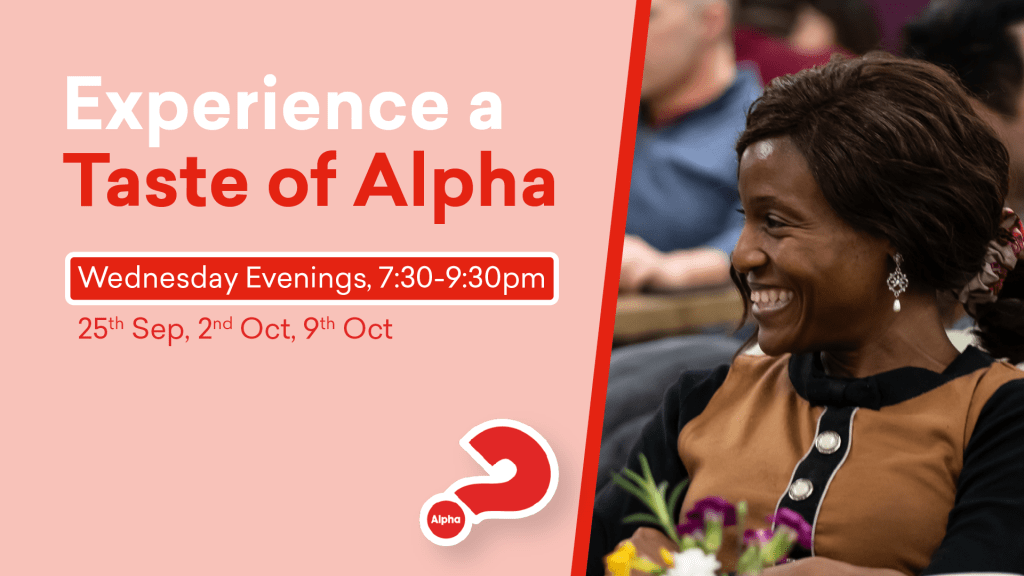
As part of our Autumn programme this year, we’re inviting everyone in Welcome Church to attend one of our ‘Taste Of Alpha’ evenings.
I attended the first one last night 🙂
These evenings are a chance for us all to experience what the first evening of an Alpha course is like, building our confidence to make invitations to our Autumn Alpha course which starts with ‘Try Alpha’ on October 16th. (In case anyone is unsure, Alpha is an 8 week course that we run, and is intended for people who want to explore what the Christian faith is all about)
What I experienced
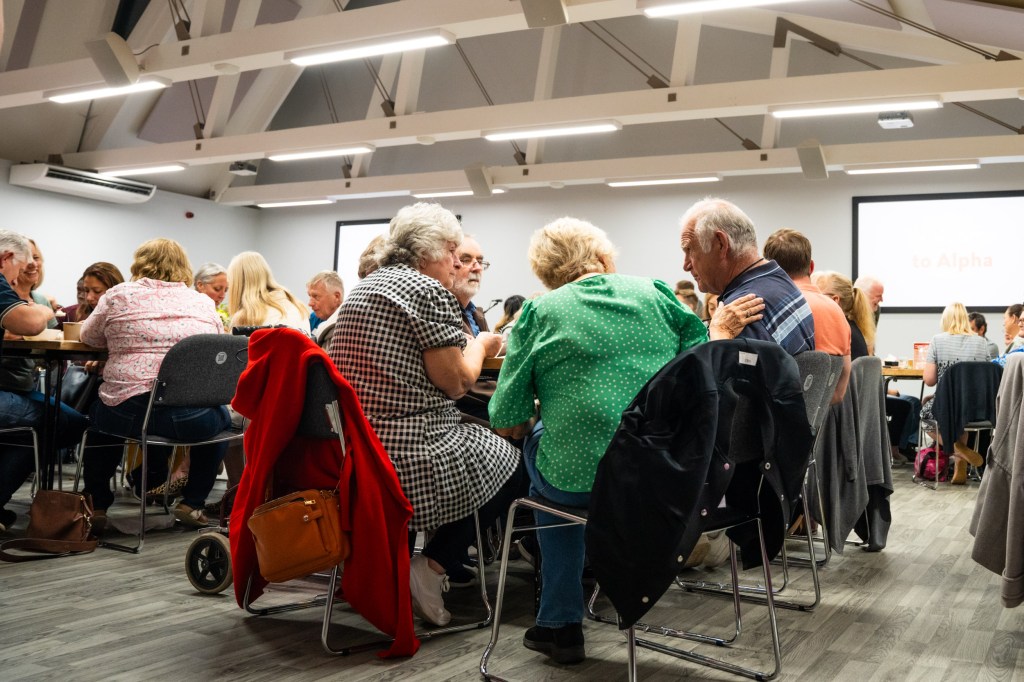
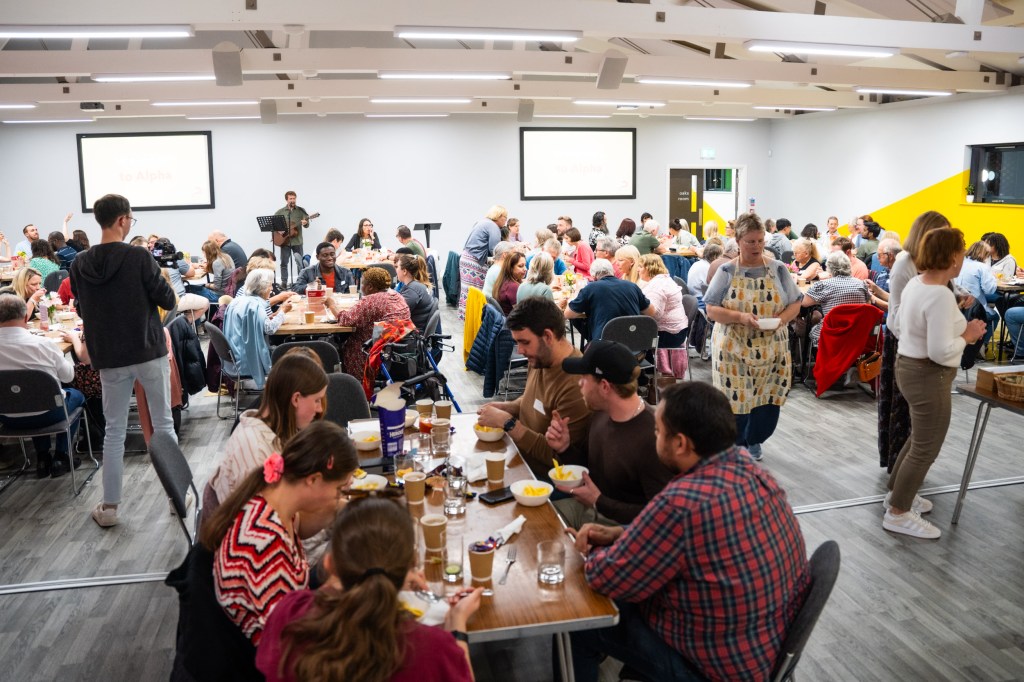
On arrival the front hall was packed with people from Welcome Church who’d signed up for the first Taste of Alpha experience. We were greeted with ‘Mocktails’, before being seated on pre-arranged tables, finding our name on a wedding style seating plan. Dub then welcomed us all and introduced Nnamdi, who led us through the full experience of the first night of an Alpha course.
The evening consisted of:
A excellent two course meal, with every table hosted by friendly table leaders who quickly got us chatting (my thanks to Edward and NG on my table)
A game of ‘Kahoot!’ – an interactive quiz, which our table sadly didn’t win
Some contemporary live music from Steve B on guitar and vocals
A screening of the new style week 1 Alpha video
Some table discussions built around two thought provoking questions
We then finished with a short chat from Dub about what we’d just experienced, and the chance to pray together on our tables and to provide feedback on the evening.
My observations
As someone who’s been very familiar with Alpha over a number of years, and who’s even spoken on several past courses, I wondered if I really needed to be there – after all, I already know all about Alpha, right???
Wrong!
I came away with three key observations:
First: I’m incredibly proud of our team. The evening was well run and brilliantly organised in every aspect. There was high quality food, the seating had been well thought through and the whole ‘production’ was great. Everything was designed to put you at ease. I want to say well done to everyone involved in making it happen. If you’d brought a friend along, you really would be proud to say that this was your church.
Second: The Alpha videos have changed A LOT, and all for the better. They were always good, but no longer is it Nicky Gumble preaching at you for 30 minutes. The videos are bright, clear and well put together with a variety of people (including Nicky) communicating the message in different ways, with regular pauses for discussion on key questions. I found myself quickly drawn in and would have been comfortable for any friend I’d invited to watch them. This change of the style to the Alpha course’s content is the biggest thing I spotted, and it’s very positive change.
Third: It actually made we want to do Alpha again! It made me feel like, if I wasn’t a Christian already, I’d definitely have wanted to book in for the actual course. I even found the questions and discussion times to be personally thought provoking again, and I went home with a few things to think about – I really didn’t expect that!
In summary, any friends that we bring along to the ‘Try Alpha’ evening on October 16th are almost certainly going to want to sign up for the whole course. In fact, the biggest takeaway for me was this:
we can safely invite people to our church’s Alpha Course with confidence that they will have a positive experience and we won’t regret bringing them
To be honest, I think I knew that anyway, but now I’ve seen it and experienced it for myself.
What’s next?
There are 3 more chances to experience A Taste Of Alpha, on each of the next three Wednesdays. If you haven’t signed up yet, please follow this link to do so. One quick warning, the final evening is almost full.
And let’s keep on praying for our friends so that we’re ready to make lots of invitations to the actual Alpha course which starts with ‘Try Alpha’ on Wednesday 16th October.
Stay up to date with what’s happening at Welcome Church by subscribing to this blog to get it straight to your inbox each week.














 Steve Petch's Blog